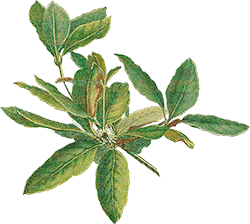
On today’s show we learn about the Caley’s Grevillea, a critically endangered flowering shrub native to Australia, specifically to the state of New South Wales, north of Sydney, near the Pacific coast. Its scientific name is Grevillea caleyi and it was first described in 1830.
For more information about Caley’s Grevillea conservation, please see the New South Wales Department of Climate Change, Energy, the Environment and Water at https://www.environment.nsw.gov.au/.
Rough Transcript
Intro 00:05
Welcome to Bad at Goodbyes.
On today’s show we consider the Caley’s Grevillea.
Species Information 02:05
Caley’s Grevillea is a critically endangered flowering shrub native to Australia, specifically to the state of New South Wales, north of Sydney, near the Pacific coast. Its scientific name is Grevillea caleyi and it was first described in 1830.
Description
Caley’s Grevillea is a medium to tall-ish spreading shrub, that can reach heights of 10 feet and widths of 13 feet. They have very long, wide-spreading branches and an open growth form, with a kind of tangled vine-like appearance.
Caley’s Grevillea grows unusual leaves. They’re large, up to 7 inches in length and 3 inches in width with each blade divided into roughly 28 oblong lobes. The blades are so deeply divided that, looking at the plant, one might mistake these lobes for distinct leaves but are in fact divisions of a single leaf. The leaves are recurved, meaning their edges (their margins) are wavy and curled. And they are covered in soft, relatively long, rusty white-ish hairs; these are trichomes. Trichomes also cover the plant’s branches and stems, looking not so much like a fuzz but more cobweb-y, a bit like the hairs on human arms and legs. The trichomes and the recurved leaf form and are adaptations to prevent water loss.
Grevillea, are often referred to as spider flowers, due to their unusual flower clusters, their inflorescences. Caley’s Grevillea inflorescences are a three-inch cluster of a dozen-plus individual flowers, growing upright, in a secund raceme arrangement, meaning the flowers only grow on one side of the stem. This is sometimes called a toothbrush flower cluster. And it is likely an adaptation for bird pollination. Birds can perch on the stem, and the flowers are there, upright, all on the same side, easy to access their nectar.
The flowers themselves do not have traditional petals, instead a whorl of four pink-ish brown tepals envelope the reproductive organs in a tube-like structure. Protruding from this tube is the style, part of the female reproductive organ. It’s 1.5 inches long, deep-red, and wiry, with a bright green domed tip, called a pollen presenter, with the pollen-receiving stigma at its center. The male reproductive organs, the pollen-producing stamen, are fused to the inside of the tepals. So while the flower bud is still closed, before the tepals open, the stamen produces its pollen. Then upon opening, the long style springs free of the bud, with the pollen presenter brushing against the stamen, collecting pollen as it’s released.
Caley’s Grevillea relies on birds, like honeyeaters and wattlebirds, and honeybees for pollen transfer. The flowers are nectar rich, producing high sugar, high energy nectar at the bottom of their flower tube. So when a pollinator visits, to feed on the nectar, it brushes against the pollen presenter, pollen sticks to its feathers or fur, and ideally is transferred when the pollinator feeds at a different individual.
On successful pollen transfer and fertilization the Caley’s Grevillea develops a small, three-quarter inch long, reddish-brown striped, woody fruit called a follicle. Each follicle contains a single seed. The seeds are tough and durable adapted for soil seed banking. Caley’s Grevillea is what is called an obligate seeder.
Here’s how this works:
Once a fruit matures and dries, while still on the plant, it splits open and drops its seed directly to the ground beneath the parent plant. These seeds are dormant and over time, due to wind and weather, may be buried in the topsoil. The seed’s dormancy persists until exposure to high heat. Bushfire. Research has shown that temperatures between about 140°F and 250°F, are needed to break the physical dormancy of the seed coat. With a short weak burn that does not raise soil temp above 140°, germination is not triggered. But with a long hot burn in which temps exceed 250°, the seed suffers too much heat damage to be viable. So the reproductive success of the Caley’s Grevillea relies on fire intensity.
And on fire frequency. Caley’s Grevillea, the plant itself is not fire-tolerant. It burns. It’s killed by fire. So in ideal circumstances, the previous generation, the parent plants, die-off in flames, in a fire event which induces germination of the next generation, the seeds that have been banked beneath. These new seedlings grow in soil now rich with nutrients released by the burnt vegetation of their parent plants and free from competition for light.
But all of this is complicated by timing, because it takes roughly 5 years for a juvenile Caley’s Grevillea to reach reproductive maturity and roughly another 5 years to build up an appreciable seed bank. If bushfire sweeps their habitat too frequently, the previous generation dies-off without ample seeds banked to replace their numbers. If fires occur too infrequently, the previous generation may die-off from old age and the banked seed never germinate and lose viability. So changes in the fire regime, the cycles, frequency, and intensity of wildfire has a pronounced effect on Caley’s Grevillea reproduction.
In The Dream
————
In the dream,
To be, in the final act, oneself, an offering,
At the end, a contribution, a commitment to a growing future.
A refutation of wealth-hoarding, of petty futile covetousness
On the flames I sing:
What I was, is now yours: Live!
In the dream.
————
Habitat
The Caley’s Grevillea is native to Australia, to the state of New South Wales at the eastern edge of the continent, to a generally suburban area, about 5 miles from the Pacific coast and about 10 miles north of Sydney, Australia’s most populous city.
This is the Sydney Basin Bioregion, historically dominated by vegetation growing on nutrient-poor sandstone plateaus, near the coastal plains. We specifically find the Caley’s Grevillea in only about 3 square miles of the Duffys Forest Ecological Community, an open woodland on the ridges of the Hornsby Plateau, roughly 500-800 ft above sea level. Here the terrain is relatively flat and the soil is dry, clay- and iron-rich, with a textured reddish-brown color. Canopy vegetation grows tall and dense, an overstory of eucalyptus and bloodwood. The midstory is more sparse and open, so light reaches the shrubby understory of grevillea, banksia and hakea, with a groundcover of grasses, and small flowers and herbs.
The climate is temperate and relatively mild, summer highs averaging in the low 80°s F, and winter lows averaging in the 50°s F. Annual rainfall averages about 50 inches, distributed fairly evenly across the year.
The Caley’s Grevillea shares its New South Wales home with:
Thick-tailed Gecko, Smooth-barked Apple, Ringtail Possum, Feathertail Glider, Red Bloodwood, Jacky Lizard, Silvertop Ash, Masked Owl, Long-nosed Bandicoot, Devil’s Twine, Hairpin Banksia, Crinkle Bush, Eastern Pygmy-possum, Swamp Wallaby, Little Wattlebird, Lesser Flannel Flower, Rusty Velvet-bush, Sugar Glider, Indian Pennywort, Glossy Black-Cockatoo, Myrtle Wattle, Woody Pear, Port Jackson Heath, Curved Rice Flower, New Holland Honeyeater, Diamond Python, Hooded Plover, and many many more.
Threats
The primary historic and contemporary threat to the Caley’s Grevillea is human habitat destruction. Development in this region began in the mid-1800s with timber clearing and sawmills, and today this is a landscape of highways, gas stations and golf courses, with fragment pockets of forest. 85% of the Caley’s Grevillea habitat has been cleared, with accelerating habitat encroachment and destruction across the 20th century.
Relatedly, reduced habitat has led to increased consumption of Grevillea seeds and seedlings by Bush Rat and Swamp Wallaby. These small mammals are increasingly concentrated in smaller habitat fragments, leading to increased seed predation and grazing. The Caley’s Grevillea seeds eaten before they can be seed banked in the soil, the seedlings consumed before they reach reproductive maturity.
And human impact on the local fire regime, challenges Caley’s Grevillea reproduction. In some parts of their habitat, both intentional and unintentional burns are happening too frequently for substantial seed banking. And in other areas, human suppression of bushfire means banked seeds are not germinating.
Additionally, human impacts like trash dumping, recreation (motorized dirt-bikes and trail clearing), and human introduced invasive species continue to threaten the remaining Caley’s Grevillea’s population.
Conservation
Fortunately, Caley’s Grevillea is legally protected at the federal and local level and the New South Wales government has developed an extensive species conservation action plan. The plan includes fire management guidelines to ensure fire frequency accords with seed germination requirements; invasive species eradication; protecting remaining habitat from clearing and disturbance; and ensuring future development does not damage plants or key habitats.
Some individuals are found in the protected wildernesses of Ku-ring-gai Chase National Park and Garigal National Park.
The plant’s seeds have been conserved offsite in the Australian PlantBank at the Australian Botanic Garden Mount Annan, and in the Millennium Seed Bank at the Kew Royal Botanic Gardens in the UK. There are offsite propagation programs in place also at the Mount Annan gardens, as well as at local nurseries, which are cultivating seedings to later be replanted in the Grevillea’s habitat.
A 2025 program is exploring “olfactory misinformation” to protect the Caley’s Grevillea from mammalian feeders. Researchers are trialing the use of odors that mimic the smell of unappealing vegetation, on four endangered species including Caley’s Grevillea. Herbivores like the Swamp Wallaby, rely on olfaction to find good food sources. So researchers are hoping the application of the scent of poor-quality food will deter the wallaby, reducing browsing pressure on the Caley’s Grevillea without needing disruptive physical barriers like fencing or toxic pesticides. These trials are ongoing but early results are promising.
Nevertheless the Caley’s Grevillea has been considered critically endangered on the IUCN Red List since 2020 and their population is currently in decline.
Our most recent counts estimate that less than 1000 Caley’s Grevillea remain in the wild.
Citations 24:59
Information for today’s show about the Caley’s Grevillea was compiled from:
Auld, T.D. & Makinson, R. 2020. Grevillea caleyi. The IUCN Red List of Threatened Species 2020: e.T112648700A113309255. – https://dx.doi.org/10.2305/IUCN.UK.2020-2.RLTS.T112648700A113309255.en
Auld, Tony D., and J. A. Scott. 2004. “Estimating Population Abundance in Species with Dormant Life-Stages: Fire and the Endangered Plant Grevillea Caleyi R. Br.” Ecological Management & Restoration 5 (2): 125–29 - https://doi.org/10.1111/j.1442-8903.2004.00187.x
Auld, Tony D, and Judith Scott. 2013. “Integrating Fire Management into Conservation Actions for the Threatened Shrub ‘Grevillea Caleyi.’” Australasian Plant Conservation: Journal of the Australian Network for Plant Conservation 22 (1): 2—4. – https://doi.org/10.5962/p.373496
Department of Climate Change, Energy, the Environment and Water. (2026, March 23). Grevillea caleyi — Caley’s Grevillea. Species Profile and Threats Database. – http://www.environment.gov.au/cgi-bin/sprat/public/publicspecies.pl?taxon_id=9683
Howes, Jeff, and Dan Clarke. 2021. “Grevillea Caleyi.” Australian Plants Society NSW. August 7, 2021. – https://resources.austplants.com.au/plant/grevillea-caleyi/.
Llorens, T., Ayre, D. & Whelan, R. Evidence for ancient genetic subdivision among recently fragmented populations of the endangered shrub Grevillea caleyi (Proteaceae). Heredity 92, 519–526 (2004). – https://doi.org/10.1038/sj.hdy.6800444
Llorens, Tanya. 2003. Genetic Structure and Diversity in the Soil-Stored Seed Bank of the Endangered Grevillea caleyi. Sydney: Australian Flora Foundation. - https://aff.org.au/results/grant-summaries/aff-llorens-g_caleyi/
Morris, E. Charles. 2000. “Germination response of seven east Australian Grevillea species (Proteaceae) to smoke, heat exposure and scarification.” Australian Journal of Botany 48 (2): 179–89. – https://doi.org/10.1071/BT98051
NSW Department of Climate Change, Energy, the Environment and Water (DCCEEW). 2025. “Tricking Herbivore Noses to Aid Plant Conservation.” Environment and Heritage. August 1, 2025. – https://www.environment.nsw.gov.au/news/tricking-herbivore-noses-aid-plant-conservation-news
NSW National Parks and Wildlife Service. 2022. Conservation Action Plan: Caley’s Grevillea (Grevillea caleyi). Parramatta: Department of Planning and Environment. – https://www.environment.nsw.gov.au/sites/default/files/conservation-action-plan-caleys-grevillea-220101.pdf
Office of Environment and Heritage. 2024. “Caley’s Grevillea - Profile.” Threatened Species Profile, NSW BioNet. – https://threatenedspecies.bionet.nsw.gov.au/profile?id=10361
Royal Botanic Gardens and Domain Trust (1999-2011) PlantNET - The Plant Information Network System of The Royal Botanic Gardens and Domain Trust, Sydney, Australia (version 2.0). – http://plantnet.rbgsyd.nsw.gov.au/cgi-bin/NSWfl.pl?page=nswfl&lvl=sp&name=Grevillea~caleyi
Wikipedia – https://en.wikipedia.org/wiki/Grevillea_caleyi
For more information about Caley’s Grevillea conservation, please see the New South Wales Department of Climate Change, Energy, the Environment and Water at https://www.environment.nsw.gov.au/
Music 27:11
Pledge 33:34
I honor the lifeforce of the Caley’s Grevillea. I will commit its name to my record. I am grateful to have shared time on our planet with this being. I lament the ways in which I and my species have harmed and diminished this species. I grieve.
And so, in the name of the Caley’s Grevillea I pledge to reduce my consumption. And my carbon footprint. And curb my wastefulness. I pledge to acknowledge and attempt to address the costs of my actions and inactions. And I pledge to resist the harm of plant and animal kin and their habitat, by individuals, corporations, and governments.
I forever pledge my song to the witness and memory of all life, to a broad celebration of biodiversity, and to the total liberation of all beings.