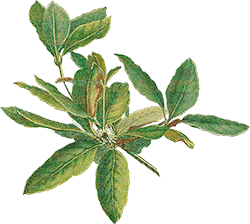
On today’s show we learn about the Baishan Fir, a critically endangered evergreen conifer native to east Asia, specifically the Zhejiang Province in southeastern China, on the slopes of Mt. Baishanzu.
Rough Transcript
Intro 00:05
Welcome to Bad at Goodbyes.
On today’s show we consider the Baishan Fir.
Species Information 02:05
The Baishan Fir is a critically endangered evergreen conifer native to east Asia, specifically the Zhejiang Province in southeastern China, on the slopes of Mt. Baishanzu. Its scientific name is Abies beshanzuensis and it was first described in 1976.
Description
The Baishan Fir grows to heights of about 60 feet, with a singular straight trunk roughly two and a half feet in diameter. The tree has a conical shape, a cone shape like a classic christmas tree.
That classic conical growth form we often find in evergreen conifers is an adaptation related to snow in their habitats. Instead of accumulating in heavy build ups that could potentially break branches, snow slides down the cone shape. Obviously some snow collects on evergreen trees, but the cone-shape helps to distribute that weight across its branches. Additionally this growth form allows lower branches to receive sunlight, particularly important when sunlight hours are short in the wintertime.
The Baishan Fir’s bark is whitish-grey, marked by vertical fissures. Their branches are long and extend horizontally from the trunk, with evergreen needles that are roughly 1.5 inches long and an 1/8 of an inch wide. The needles have a glossy dark green upper surface and two silvery-white stomatal bands on the lower surface.
These stomatal bands facilitate gas and water exchange. Stomata are microscopic pores that allow the plant to take in carbon dioxide for photosynthesis and release oxygen and water vapor. These pores can open and close, regulating intake and outlet, a part of the fir’s respiratory system.
Reproduction
The Baishan Fir is monoecious, meaning a single individual tree bears both male and female reproductive structures. It is a conifer, meaning they produce cones. The male pollen cones are about 1 in tall, yellowish-red in color. The female cones are much larger, roughly 4 inches in length and are initially greenish-yellow, maturing to yellowish then brown.
The cones grow upright from the branches. If you are interested in quickly identifying evergreen trees, generally if the cone grows upright, it is a fir. If the cone is pendulous, hanging downward, it is a pine or a spruce.
So, these cones develop in the springtime and release their pollen in May. The Baishan Fir is wind pollinated. If fertilization occurs, the seed cones reach full maturity in October and November, and then disintegrate, the cones’ woody bits break apart to release their seeds. The seeds are small and have wings, they are dispersed by anemochory, that is by the wind.
The Baishan Fir is a long lived species, living 200+ years, the oldest recorded individual is 226 years old.
In the Dream
————
In the dream,
To be beholden to the wind.
A skiff adrift with tattered sail. A child and a kite.
A flag that longs to speak.
A love note dropped from a balcony. Ashes to the breeze.
A future on a winged seed.
In the dream.
————
Habitat
The Baishan Fir is native Zhejiang Province, in southeastern China, specifically to Mt. Baishanzu, in the Fengyangshan–Baishanzu National Nature Reserve.
Mt. Baishanzu is the result of volcanic activity in the Early Cretaceous period roughly 150 millions years ago, followed by millions of years of both tectonic uplift and erosion. Weathering by high precipitation, has created steep cliffs and deep gorges and valleys.
The terrain rises sharply from elevations of about 1300 feet in the river valleys, to 6000 feet at the summit.
We find our Baishan Fir at these higher elevations, roughly a mile above sea level, a rugged landscape of rocky outcrops when it grows in a mixed forest of oaks, maples, and other conifers. The region is severe, mountainous, and rocky, but very green and humid. High precipitation means these forests are dense with a lush understory.
Summer highs average in the mid 80s°F. Winter lows dip well below freezing. The region sees roughly 50 inches of precipitation per year and up to three feet of snow.
The Baishan Fir shares its mountain home with:
Chinese Yew, Clouded Leopard, Japanese Alder, Chinese Hemlock, Gray Birch, South China Tiger, Rove Beetle, Cylinder Maple, Horsetail Pine, Three-Pointed Cedar, Japanese Blue Oak, Hairy Bamboo, Sumatran Serow, Mountain Bamboo, Rushstrat’s Wolf Snake, Rhesus Macaque, Black Muntjac, Chinese Maple, Giant Salamander and many many more.
Threats
Historically, deforestation, in this case land cleared for agriculture, resulted in significant decline in the Baishan Fir population.
And then later as the cleared land regrew, faster maturing deciduous shrubs and trees now outcompete the Baishan Fir for available resources. In particular, a 2024 study found that forest floor coverage and the accumulation of plant litter like fallen leaves and branches, are a major obstacle to successful regeneration of the Baishan Fir. New Baishan Fir seedlings are unable to grow through this material to get enough sunlight. And the study directly demonstrated increased seedling success when debris was removed.
Low population is a threat. Small populations have decreased genetic diversity which results in what’s called inbreeding depression. The probability of fertilization between close relatives increases, which often results in less viable seeds.
And because the few remaining mature trees are all found in a single locale, stochastic events are a concern. Stochastic means random or unpredictable, so like a rockslide, or extreme windstorm, or uncharacteristically heavy snowfall, could quickly wipe out the small remaining population all at the same time.
Human induced climate change, resulting from continued over-reliance on fossil fuels, presents an additional threat. Global warming is causing temperature rise in the region, affecting the Baishan Fir’s natural regeneration. The Baishan Fir is particularly heat-intolerant and warmer temps have shown to affect the tree’s ability to photosynthesize, to produce the energy needed for growth.
Conservation
Fortunately the wild population of the Baishan Fir and its habitat is protected within the Fengyangshan-Baishanzu National Nature Reserve. And it is legally protected in China.
There is an offsite cultivation program in place that has successfully produced new seedlings. And efforts are very recently underway to reintroduce these cultivated plants back into the species habitat, though the success of that program is as yet unknown.
The Baishan Fir has been considered critically endangered on the IUCN Red List since 1998 and their population is currently in decline.
Our most recent counts estimate only 3 mature Baishan Fir remain in the wild.
Citations 18:37
Information for today’s show about the Baishan Fir was compiled from:
Christian, T. (2021), “Abies beshanzuensis”. Trees and Shrubs Online. – http://treesandshrubsonline.org/articles/abies/abies-beshanzuensis
Farm, Wanli Forest, and Chekiang Chingyuan County. “Abies beshanzuensis MH Wu—A new species of Abies from Chekiang.” Journal of Systematics and Evolution 14, no. 2 (1976): 15. – https://www.jse.ac.cn/EN/Y1976/V14/I2/15
Hu, Rui, Yajing Liu, Jiaxin Zhang, Hua Xing, Sha Jiang, and Yu Liu. 2022. “Auxiliary Seed Treatment Is Necessary to Increase Recruitment of a Critically Endangered Species, Abies beshanzuensis (Pinaceae)”. Forests 13, no. 6: 961. – https://doi.org/10.3390/f13060961
Hu, X. 2021. Abies beshanzuensis. The IUCN Red List of Threatened Species 2021: e.T32318A150298372. – https://dx.doi.org/10.2305/IUCN.UK.2021-3.RLTS.T32318A150298372.en
Lifang Zhang, Yougui Wu, Jie Feng, Yang Zhang, Aya Hafsi, Donghao Wu, Jinliang Liu, Boliang Wei, Hongfei Lv, Mingjian Yu. “Obstacles affecting seedling germination and reproductive success of the critically endangered species Abies beshanzuensis.” Global Ecology and Conservation, v. 56, 2024. – https://doi.org/10.1016/j.gecco.2024.e03317
Liu, Bin, Ke Liu, Xiaorong Chen, Duohong Xiao, Tingjin Wang, Yang Yang, Hui Shuai, Sumei Wu, Lu Yuan, and Liping Chen. 2023. “Comparative Transcriptome Analysis Reveals the Interaction of Sugar and Hormone Metabolism Involved in the Root Hair Morphogenesis of the Endangered Fir Abies beshanzuensis” Plants 12, no. 2: 276. - https://doi.org/10.3390/plants12020276
Liu, K., Xiao, D., Xiong, Y. et al. Grafting enhances growth vigor and photosynthetic capacity in the progeny of critically endangered Abies beshanzuensis. BMC Plant Biology 26, 56 (2026). – https://doi.org/10.1186/s12870-025-07708-y
Shao, S., Jin, Z. & Weng, Y.H. “Lignin characteristics of Abies beshanzuensis, a critically endangered tree species”. Journal of Wood Science v. 54, 81–86 (2008). – https://doi.org/10.1007/s10086-007-0918-4
Wikipedia – https://en.wikipedia.org/wiki/Abies_beshanzuensis
Yang Ling, Liang Siqi, Pan Jiaming, Wei Jinxin, Ding Tao, Jiang Rihong, Shao Yizhen, Zhang Xianchun, Liu Yongbo, Xiang Qiaoping. “Species classification of endangered plants Baishanzu fir and resource fir and the protection of their genetic resources”. Chinese Journal of Plant Ecology v. 47 no.12: 1629-1645. (2023). – https://dx.doi.org/10.17521/cjpe.2022.0295
Y.Yang, D.Zhang, D.Luscombe, W-b Liao, A.Farjon, T.Katsuki, Q.Xiang, N.Li and K.Rushforth, 2019, “Abies beshanzuensis”. Threatened Conifers of The World. – https://threatenedconifers.rbge.org.uk/conifers/abies-beshanzuensis
Zhao, L., Li, T., Chen, X. et al. Resistance mechanism of Abies beshanzuensis under heat stress was elucidated through the integration of physiological and transcriptomic analyses. BMC Plant Biology 25, 621 (2025). – https://doi.org/10.1186/s12870-025-06641-4
Music 20:20
Pledge 27:03
I honor the lifeforce of the Baishan Fir. I will commit its name to my record. I am grateful to have shared time on our planet with this being. I lament the ways in which I and my species have harmed and diminished this species. I grieve.
And so, in the name of the Baishan Fir I pledge to reduce my consumption. And my carbon footprint. And curb my wastefulness. I pledge to acknowledge and attempt to address the costs of my actions and inactions. And I pledge to resist the harm of plant and animal kin and their habitat, by individuals, corporations, and governments.
I forever pledge my song to the witness and memory of all life, to a broad celebration of biodiversity, and to the total liberation of all beings.