On today’s show we learn about the Barker’s Koromiko, a critically endangered flowering shrub native to Aotearoa Rēkohu / New Zealand’s Chatham Islands, an archipelago roughly 400 miles east of Te Waipounamu / New Zealand’s South Island. Its scientific name is Veronica barkeri and it was first described in 1899.
Rough Transcript
Intro 00:05
Welcome to Bad at Goodbyes.
On today’s show we consider the Barker’s Koromiko.
Species Information 02:05
The Barker’s Koromiko is a critically endangered flowering shrub native to Aotearoa Rēkohu / New Zealand’s Chatham Islands, an archipelago roughly 400 miles east of New Zealand’s South Island. Its scientific name is Veronica barkeri and it was first described in 1899.
Description
The Barker’s Koromiko, unlike most of their relatives in the Veronica family, is quite tall. Veronica tend to be generally low-growing, groundcover shrubs roughly one to four feet in height, but the Barker’s Koromiko can grow to 40 feet tall in the wild.
Scientists call this evolutionary phenomena Island Gigantism, and we find it occurring globally in remote, isolated habitats, observed in both animal and plant species. For example some green soft-stemmed herbaceous plants, including our Barker’s Koromiko, due to limited competition and the absence of large grazers, have evolved to allocate energy to structural support and slow tall vertical growth. They produce woody stems which allows for significant size, compared to their mainland kin. And so the Barker’s Koromiko’s growth form presents more like a small tree or very large shrub rather than low groundcover like their continental relatives.
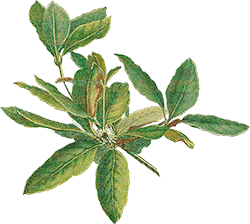
The Barker’s Koromiko leaves are yellowish-light green on their adaxial surface (that’s the upper side) and a paler green on the bottom side, the abaxial surface. The leaves are lanceolate, so shaped like a spearhead, narrow, less than an inch in width, long, 3.5 inches in length, and oblong-shape coming to a sharp point at the tip. They have a leathery texture and the leaf’s margins, that is the outer edge of the leaf, are covered in short fine hairs, both adaptations to help prevent water loss in their windswept habitat.
Reproduction
The Barker’s Koromiko is monoecious, both male and female reproductive systems grow on the same individual. In our case, the Barker’s Koromiko grows inflorescences, flower clusters of 20-50 bisexual and female flowers generally upward pointing, roughly three inch tall called racemes. Racemes are flower clusters, in which the flowers grow on short stalks of about equal length at equal distances along a central stem.
The plant flowers from December–March (summer in the Southern Hemisphere) and the flower petals shift in color over the time. They open bright white marked with blue-ish, pinkish, purple before fading to a soft white, pale blue as they age. The flowers are likely insect-pollenated, bees and flies, and after fertilization, in January–April, develop a small dry seed capsule roughly a quarter inch long and an eighth of an inch wide. The capsules remain on plant and once mature, split open to release a tiny flat winged brown seed. These seeds are wind-dispersed, carried on ocean breezes away from their parent plants.
The Barker’s Koromiko is reasonably long-lived, with individuals known to be over 30 years old.
In The Dream
————
In the dream,
Dream to be born on the wind
The first glimmering, a drifting, a floating,
a tumbling, a gliding, a flying, a falling
Terror, promise, confusion, delight
What is to live, what it is to make a life.
In the dream.
————
Habitat
The Barker’s Koromiko is native to Aotearoa New Zealand. There is a lovely cultural convention in this country to employ both indigenous place names alongside the European names. We will try to respect that convention and apologize for poor pronunciations.
So, the Barker’s Koromiko is native to Aotearoa / New Zealand, to Rēkohu / the Chatham Islands. This is a very remote archipelago in the South Pacific Ocean, roughly 400 miles east of Te Waipounamu / New Zealand’s South Island. There are two main islands, Rēkohu and Rangiauria / Pitt Island. Total land mass is roughly 300 sq miles; about the size of New York City.
The islands were formed roughly 80 million years ago by volcanic upthrust, magma collecting beneath the crust pushing the land upward, eventually above the ocean’s surface. The islands are a mix of volcanic rock and limestone, a landscape of swamps, damp scrublands and broadleaf forests. The islands see persistent salt-laden winds, so the forests are relatively low-stature, the tallest trees only growing to about 60 feet in height, and the vegetation is dominated by large tree ferns.
Today, we find the Barker’s Koromiko in the southern half of Rēkohu, on Rangiauria, and on Rangatira / South East Island, a tiny protected offshore sanctuary. The plant grows inland in open forests, atop coastal bluffs and on the banks of deep streams.
This is a Chatham Island Temperate Forest ecoregion, with a humid subtropical climate that is relatively stable year-round. Summer highs reach into the upper 60s°F, and winter lows drop into the 40s°F. It rains about 200 days per year, an average of roughly 35in total annually.
The Barker’s Koromiko shares its island home with:
Shy Albatross, Chatham Parakeet, Chatham Sedge, Driftwood Rim-Lichen, Black Robin, Tomtit, Lowland Ribbonwood, Chatham Islands Petrel, Chathams Skink, Erect-crested Penguin, New Zealand Nightshade, New Zealand Spinach, Sooty Shearwater, Northern Kakabeak, Chatham Island Christmas Tree, White-fronted Tern, New Zealand Linen Flax, Pitt Island Shag, Scurvy Grass, Chatham Islands Forget-Me-Not, Hedgehog, Shore Plover, Silver Gull, Pitt Island Longhorn, Chatham Islands Pigeon, Chatham Islands Oystercatcher, and many many more.
Threats
Historically, both indigenous peoples, who came to the islands in the 1400s and European colonizers, who arrived in the late 1700s clearcut the land for agriculture, destroying the native habitat and significantly reducing the population of Barker’s Koromiko which was once widespread across the islands.
Today, they are threatened by human introduced mammal species. For millenia the island was free of large grazers but now livestock: cattle, sheep, and pigs feed upon the plant, eating both the bark and greenery. And accidentally introduced possum consume Koromiko seedlings, preventing regeneration.
Conservation
Fortunately, most of the remaining Barker’s Koromiko is on protected land, and the species is legally protected.
The New Zealand Department of Conservation has instituted animal management measures to help protect native vegetation, constructing and maintaining mammal-exclusion fences. Additionally a possum control program is in place.
These programs have demonstrated some success, in a fenced area of the Tuku River Reserve 100s of new Barker’s Koromiko seedlings were observed.
There are off-site cultivation programs in place growing wild-collected seed for later replanting and translocation programs are trying to re-establish new populations across the plant’s historical range.
In February 2025, a partnership between the Department of Conservation, local orgs and the Chatham Islands Landscape Restoration Trust, joined the international Island-Ocean Connection Challenge, a global endeavor dedicated to restoring and rewilding island-ocean ecosystems by 2030. This program will support natural regeneration through the eradication of harmful introduced feral mammals, and active restoration, replanting and reintroduction of native species.
Nevertheless the Barker’s Koromiko has been considered critically endangered on the IUCN Red List since 2025 and their population is currently in decline.
Our most recent counts estimate that less than 250 Barker’s Koromiko remain in the wild.
Citations 18:37
Information for today’s show about the Barker’s Koromiko was compiled from:
Baeckens, S., Van Damme, R. (2020). The island syndrome. Current Biology, 30(8), R338–R339. – https://doi.org/10.1016/j.cub.2020.03.029
Breitwieser I., Heenan P.J.; Nelson W.A., Wilton A.D. eds. (2010-2026). Flora of New Zealand Online – Taxon Profile - Veronica barkeri. – https://www.nzflora.info/factsheet/taxon/Veronica-barkeri.html
Chatham Island Temperate Forests. Ecoregion Snapshots: Descriptive Abstracts of the Terrestrial Ecoregions of the World, 2021. Developed by One Earth and RESOLVE. – https://www.oneearth.org/ecoregions/chatham-island-temperate-forests/
de Lange, P. 2025. Veronica barkeri. The IUCN Red List of Threatened Species 2025: e.T30493A62620653. – https://dx.doi.org/10.2305/IUCN.UK.2025-1.RLTS.T30493A62620653.en
de Lange, P.J. (2026): Veronica barkeri Fact Sheet (content continuously updated). New Zealand Plant Conservation Network. – https://www.nzpcn.org.nz/flora/species/veronica-barkeri/
iNaturalist – Chatham Islands
Kavanagh, P.H. (2015), Moa Herbivory and Divaricate Plants. Austral Ecology, 40: 206-211. – https://doi.org/10.1111/aec.12196
Mulligan, J. (Host), & Toki, N. (Presenter). (2019, May 17). Critter of the week: Chatham Island tree hebe [Audio radio broadcast]. Radio New Zealand. – https://www.rnz.co.nz/national/programmes/afternoons/audio/2018695557/critter-of-the-week-chatham-island-tree-hebe
New Zealand Department of Conservation. (n.d.). Chatham Islands plants. – https://www.doc.govt.nz/nature/native-plants/chatham-islands-plants/
Urlich, S. C., & Brown, K. P. (2005). Monitoring the effects of animal pests on Chatham Islands vegetation: A plan for 2004–2013. New Zealand Department of Conservation. – https://www.researchgate.net/publication/309718759_Monitoring_the_effects_of_animal_pests_on_Chatham_Island_vegetation
Wikipedia - https://en.wikipedia.org/wiki/Veronica_barkeri
For more information about conservation on Rēkohu / Chatham Islands see the Chatham Islands Landscape Restoration Trust at https://www.chathamrestorationtrust.org.nz/.
Music 20:29
Pledge 26:27
I honor the lives of all Barker’s Koromiko. I will commit their name to my record. I am grateful to have shared time on our planet with this being. I lament the ways in which I and my species have harmed and diminished this species. I grieve.
And so, in the name of the Barker’s Koromiko I pledge to reduce my consumption. And my carbon footprint. And curb my wastefulness. I pledge to acknowledge and attempt to address the costs of my actions and inactions. And I pledge to resist the harm of plant and animal kin and their habitat, by individuals, corporations, and governments.
I forever pledge my song to the witness and memory of all life, to a broad celebration of biodiversity, and to the total liberation of all beings.