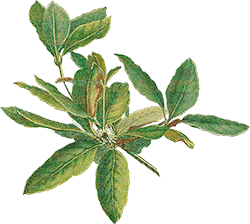
On today’s show we learn about the Golden Camellia, a critically endangered flowering evergreen native to southeast Asia, on the China Vietnam border, to the provinces of Guangxi in China and Cao Bang in Vietnam. Its scientific name is Camellia impressinervis and it was first described in 1979.
For more information about Golden Camellia and Camellia conservation please see the International Camellia Society at https://internationalcamellia.org/.
Rough Transcript
Intro 00:05
Welcome to Bad at Goodbyes.
On today’s show we consider the Golden Camellia.
Species Information 02:05
The Golden Camellia is a critically endangered flowering evergreen native to southeast Asia, on the China Vietnam border, to the provinces of Guangxi in China and Cao Bang in Vietnam. Its scientific name is Camellia impressinervis and it was first described in 1979.
Description
The Golden Camellia presents as a medium-large understory shrub or small subcanopy tree with individuals ranging from roughly 5 to 17 feet in height. Their trunk grows to about 1-3 inches in diameter and has smooth grayish-brown bark. Their leaves are elliptical with a serrated margin; the edge of the leaf is wavy and pointed. The upper face of the leaf (the adaxial side) is dark green, glossy, smooth; the underside (the abaxial side) is paler green, with sparse small hairs, and raised veins. New leaves emerge in a purplish-red color and slowly fade to green as they age.
The Golden Camellia produces stunning deep golden-yellow flowers, with 12 thick petals arranged in a kind-of bell shape, cupped around the reproductive organs. At the flower’s center the pistil (the female reproductive organ) grows about three quarters of an inch in height and is surrounded by roughly 100 skinny tightly packed stamen (the male reproductive parts), which are also about three quarters of an inch tall, each topped with a tiny pollen sac (the anther). These reproductive parts are also golden-yellow; the flower is a vibrant, bright, kind of glowy yellow monochrome. On the branches, the flowers are often described as nodding, they can be somewhat droopy and downward facing, growing all across the branches intermingled with the plant’s leaves.
Historically, the flower petals of the Golden Camellia have been harvested and dried for use as herbal tea and as medicine. Recent research has demonstrated a concentration of antioxidants present in the petals.
Reproduction
Golden Camellia bloom from roughly January through March. They are pollinated by bird and insect. Specifically sunbird, who perch on the branches and push their curved bills directly into the flower to sip nectar. During which their head and throat feathers collect pollen grains from the anthers, to ideally later deposit that pollen when they drink from subsequent flowers on different individuals. Additionally honeybee and hoverfly visit the flower, collecting and spreading pollen.
Once fertilized, the flower, across spring and summer, produces a small dry fruit that matures and splits open in October. Seeds are dispersed by barochory, that is gravity. The fruit while still on the branches opens, releasing dense, wingless seeds which fall to the forest floor beneath the parent plant.
Studies of closely related Camellia species have shown that these seeds are sometimes farther dispersed by small mammals, (mice, rats) and that may be the case for our Camellia impressinervis as well.
New Golden Camellia saplings grow very slowly, just to a height of under a foot with an eighth of inch trunk diameter after roughly 5 years, and can take as many as 8-10 years to reach reproductive maturity in the wild. A cultivated individual was documented taking a full 17 years to first flower.
The Golden Camellia, to survive that long adolescence, is adapted for basal resprouting. So just below the ground’s surface at the root crown, the plant stores a sugar and carbohydrate reserve, and dormant growth cells, in what’s called a belowground bud bank. If the trunk and branches suffer serious, potentially fatal injury, that reserve is activated: dormant buds divide and push through the bark at the trunk’s base to quickly form new shoots and leaves to rapidly restart photosynthesis. And in doing so the Golden Camellia insures its survival to damage, that in other species, would cause mortality.
In The Dream
————
In the dream,
To push my face into the blossom,
Into the the golden,
Nestled in the petals,
Tickled by the stamen
Tender to the pollen, and to drink.
To sip the sweet gladness of dirt and light,
In the unspoken camaraderie
Of the flower and the flighted.
And this is the true dream:
To be a courier in the great continuance of living
Instead of a disruption.
In the dream.
————
Habitat
The Golden Camellia is native to the border of south China and north east Vietnam, found only in the Guangxi province of China and the Cao Bang province of Vietnam, roughly 100 miles north of the South China Sea. This is a mountainous rocky region of steep limestone peaks and deep valleys, with the plant found at elevations ranging from roughly 400 to 1500 feet above sea level. The Camellia is most concentrated in clusters in the valleys, in a total area of roughly 30 square miles.
Here, bare cliffs, exposed peaks, and deep ravines are pocked with evergreen broad-leaved forests, and within these stands the Golden Camellia forms part of the subcanopy and understory. Soil is thin and the plant often roots in dirt accumulated in the limestone crevices and on cliffside terraces.
This is a remarkable landscape carved by millenia of watery erosion. The mountains and valleys are not the result of tectonic uplift or volcanic accumulation. Instead over millions of years, heavy rainfall has weathered the softest limestone, dissolving the plateau from the top down, a subtraction leaving an expanse of steep, discrete, domed peaks. It looks a bit like an archipelago of grey, green islands upon a blanket of foggy mist (low cloud resulting from the region’s high humidity).
This is a tropical monsoon climate, with a distinct wet season from May to September and a cooler dry season from October to April. Summer temps reach into the upper 80s°F and winter lows into the mid 40s°F, with roughly 65 inches of annual precipitation.
The Golden Camellia shares its rocky range with:
White-tailed Robin, Maritime Striped Squirrel, Common Sun Skink, Many-spotted Cat Snake, Yellow-bellied Warbler, Spiny Orb-Weaver, Grey Wagtail, Annam Tree Frog, Redflower Ragleaf, Zebra Spiderwort, Rose Swallowtail, Plain Tiger Butterfly, Fork-tailed Sunbird, Forest Garden Lizard, White-winged Magpie, Plantain, South China Moon Moth, Quail Grass, Northern Treeshrew, Silver Pheasant, Papaya, Banana Stem Weevil, Chestnut-capped Babbler, East Asian Ornate Chorus Frog, Yellow Crazy Ant, White-rumped Shama, Centipede Grass Orchid, Oriental House Gecko, Crimson Marsh Glider, Mainland Leopard Cat, and many many more.
Threats
Historically, the Golden Camellia has been threatened by human overharvesting, collected for commercial sale for herbal tea and medicinal use. Wild flowers are removed, stripped and dried, obviously dramatically affecting their reproduction. Relatedly whole individuals were removed from their native habitat for private and commercial cultivation, also reducing the wild population.
Over the last 60-70 years human encroachment upon their habitat is also affecting the Golden Camellia. This region has seen significant agricultural expansion resulting in deforestation for commercial sugarcane, cassava, and cinnamon farming.
Limestone quarrying and timber logging has further degraded the ecosystem. As larger canopy trees are removed, or incidentally felled in the mining process, the shade-reliant Golden Camellia struggles to survive the increased sun exposure.
And human induced climate change, resulting from persistent overreliance on fossil fuels, also threatens the Golden Camellia. This region is already seeing longer dry seasons and shorter but intense rainy seasons and higher temperatures. These rapid climate shifts disrupt reproduction cycles, and the frequency and intensity of extreme weather accelerates soil erosion and worsens desertification; that is the degradation of green fertile land into barren arid desert, a process already affecting the Golden Camellia’s native habitat.
Conservation
Fortunately much of the Golden Camellia’s wild population is located within protected areas, like the Nonggang National Reserve and the Xialei National Nature Reserve both in Guangxi. And the species is legally protected at the national level by the Chinese government.
There are living offsite collections of Golden Camellia, for study and conservation, at the Kunming Botanical Garden, the Nanning Botanical Garden, the Guilin Botanic Garden, the Jinhua International Camellia Species Garden, and the Fangcheng Golden Camellia Nature Reserve and Gene Bank.
And there is ongoing study of practical propagation and cultivation strategies at the Silviculture Research Institute at the Vietnamese Academy of Forest Sciences.
Nevertheless the Golden Camellia has been considered critically endangered on the IUCN Red List since 2015 and their population is in decline.
Our most recent counts estimate that less than 45 Golden Camellia remain in the wild.
Citations 20:51
Information for today’s show about the Golden Camellia was compiled from:
Ashton, P., & Zhu, H. (2020). The tropical-subtropical evergreen forest transition in East Asia: An exploration. Plant diversity, 42(4), 255–280. – https://doi.org/10.1016/j.pld.2020.04.001
Fern, K. (2026, September 10). Camellia impressinervis. Temperate Plants Database. – http://temperate.theferns.info/plant/Camellia+impressinervis
Geekiyanage, N., Goodale, U. M., Cao, K., & Kitajima, K. (2019). Plant ecology of tropical and subtropical karst ecosystems. Biotropica, 51(5), 626–640. https://doi.org/10.1111/btp.12696
Gu, W., Xiao, X., Ran, Z., Yan, C., Jiang, D., Zhou, L., An, M., & Li, Z. (2025). Distribution Prediction and Adaptability Analysis of Section Camellia Plants (Camellia Genus) in China Based on the MaxEnt Model. Ecology and evolution, 15(4), e71365. – https://doi.org/10.1002/ece3.71365
iNaturalist – near Nonggang reserve, Guangxi
Min, T., & Bartholomew, B. (2007). Camellia impressinervis. In Z. Y. Wu, P. H. Raven, & D. Y. Hong (Eds.), Flora of China: Vol. 12. Hippocastanaceae through Theaceae (pp. 368–369). Science Press; Missouri Botanical Garden Press. – http://www.efloras.org/florataxon.aspx?flora_id=2&taxon_id=242310009
Phung, D., Son, H., Duc, D., Ninh, V., Thuyet, D., & Do, T. V. (2019). Cutting size and position affect rooting efficiency of Camellia impressinervis: A golden camellia. Plant Cell Biotechnology and Molecular Biology, 20(3–4), 179–187. – https://ikprress.org/index.php/PCBMB/issue/view/685
Thang, N. T., Duc, D. T., Bon, T. N., Minh, N. T., Manh, T. D., Thanh, H. V., Tuan, N. V., Dung, P. T., Quy, T. H., Phuong, N. T. T., Linh, M. T., Hiep, N. H., & Do, T. V. (2025). Growth of three species of golden Camellia grown under natural forest canopy in Northern, Vietnam. International Journal of Research Studies in Agricultural Sciences, 11(1), 47–54. – https://doi.org/10.20431/2454-6224.1101005
Thang, N. T., Linh, M. T., Manh, T. D., Duc, D. T., Huong, N. T. T., Phuong, N. T. T., & Do, T. V. (2020). Effects of storage and pre-sowing treatment on seed germination of Camellia impressinervis. Plant Cell Biotechnology and Molecular Biology, 21(1–2), 77–83. – https://ikprress.org/index.php/PCBMB/article/view/4927
Trung, P. D., Manh, T. D., Thang, N. T., Thuyet, D. V., Duc, D. T., Kien, N. D., & Tam, H. T. (2019). A method to select plus tree for flower purpose in forestry. Asian Journal of Research in Crop Science, 4(1), 1–8. – https://doi.org/10.9734/ajrcs/2019/v4i130063
Tuan, N. V., Trung, P. D., Manh, T. D., Thang, N. T., Thuyet, D. V., Duc, D. T., Linh, M. T., Son, H. T., Ninh, V. T., & Do, T. V. (2019). Possible planting areas for golden camellia - Camellia impressinervis in Vietnam. Asian Journal of Agricultural and Horticultural Research, 3(3), 1–7. – https://doi.org/10.9734/ajahr/2019/v3i330000
Wang, Z.-L., Shen, Y.-G., & Feng, B.-J. (n.d.). The characteristics of tropical and rare golden camellias and their introduction. International Camellia Society. Retrieved September 10, 2026. - https://internationalcamellia.org/en-us/conservation-preservation-of-camellias/tropical-rare-golden-camellias
Wei, L., Cai, X., Yang, Y., Jiang, H., Peng, L., Liu, S., Wei, X., & Chai, S. (2026). Analysis of genetic diversity and population genetic structure of Camellia impressinervis. Guihaia, 46(1), 28–38. – https://gxzw.ijournals.cn/gxzw/article/html/20260103
Wheeler, L. & Rivers, M.C. 2015. Camellia impressinervis. The IUCN Red List of Threatened Species 2015: e.T62053740A62053758. – https://dx.doi.org/10.2305/IUCN.UK.2015-2.RLTS.T62053740A62053758.en
For more information about Golden Camellia and Camellia conservation please see the International Camellia Society at https://internationalcamellia.org/.
Music 23:04
Pledge 31:01
I honor the lives of all Golden Camellia. I will commit their name to my record. I am grateful to have shared time on our planet with this being. I lament the ways in which I and my species have harmed and diminished this species. I grieve.
And so, in the name of the Golden Camellia I pledge to reduce my consumption. And my carbon footprint. And curb my wastefulness. I pledge to acknowledge and attempt to address the costs of my actions and inactions. And I pledge to resist the harm of plant and animal kin and their habitat, by individuals, corporations, and governments.
I forever pledge my song to the witness and memory of all life, to a broad celebration of biodiversity, and to the total liberation of all beings.