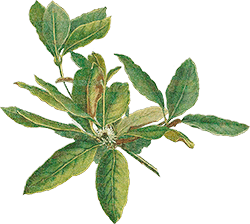
On today’s show we learn about the Sosúa Sage, a critically endangered perennial shrub native to the Caribbean, specifically the north central coast of the Dominican Republic. Its scientific name is Salvia lachnaioclada and it was first described in 1898.
For more information about coastal conservation near Sosúa in the Dominican Republic, please see the Fundación Ecológica Maguá on Instagram at instagram.com/fundacionecologicamagua/
Rough Transcript
Intro 00:05
Welcome to Bad at Goodbyes.
On today’s show we consider the Sosúa Sage.
Species Information 02:05
The Sosúa Sage is a critically endangered perennial shrub native to the Caribbean, specifically the north central coast of the Dominican Republic. Its scientific name is Salvia lachnaioclada and it was first described in 1898.
Description
The Sosúa Sage is a small to medium sized flowering branching shrub, that reaches heights between 2 and 5 feet, with skinny woody stems covered in dense, silvery-white trichomes; tiny hairs.
Their leaves are ovate or oblong-elliptic, that is egg or elongated oval-shaped, with crenate-serrate margins; the leaf edge is serrated with tiny, blunt notches. The upper surface of the leaf, the adaxial side, is deep green, wrinkled, and pocked with spare small hairs. The lower surface, the abaxial side, is paler, with thick veins, and is dense with soft hairs. These hairs, these trichomes form a protective boundary layer that shields against salt spray, reduces water lost to transpiration, and reflects excess sunlight, in their tropical coastal habitat.
The Sosúa Sage flowers year-round, producing vivid peachy-orange blossoms. The flower’s petals are fused together in a kind-of claw-shaped, roughly quarter inch wide, one inch long tube, covered in short soft white hairs. At the top, the tube separates into the labellum, a split lower lip of two petals that curl downward, and an upper hood, the galea, from which the flower’s reproductive organs extend. Two bright yellow stamen (the male reproductive parts) arch outward about a half inch, from the upper hood, topped with dark brown pollen sacs (the anther). And just above those, and slightly longer are the female reproductive parts: a slender, red style that forks at the tip into two pollen-receiving stigma.
Reproduction
This arrangement is adapted for cross-pollination. The Sosúa Sage is pollinated by hummingbird. So hummingbird, most likely the Hispaniolan Mango Hummingbird, feed on the sage’s nectar, held at the base of the flower tube. The Hispaniolan Mango Hummingbird has a roughly three quarter inch bill. The Sosúa Sage’s flowers are roughly 1 inch long. So the hummingbird has to push its head a bit into the flower to drink the nectar. In doing so they first brush up against the slightly-longer pollen-receptive stigma, potentially depositing pollen the hummingbird picked up from another individual. And then brushing again the pollen-bearing stamen. The hummingbird drinks its fill (our sage is a prodigious nectar producer), and then on exit will again brush against the stamen, again potentially receiving more pollen on the top of its head, and because of how the stamen and style are arranged the stigma are now pushed out of the way, so as not to receive pollen, preventing self-pollination.
Once pollinated the Sosúa Sage produces a dry schizocarp fruit, that means split fruit, which divides into four, tiny single-seeded, dark brown to black nutlets, each about a sixteenth of an inch in length. So very very small, like half the size of a grain of rice. And then once mature, the tiny nutlets are distributed by hydrochory and anemoballochory. So hydrochory is water, rain washes the tiny nutlets out of the flower. With anemoballochory, wind gusts fling the nutlets outward away from the plant.
Here on the northern coast of the Dominican Republic these nutlets are flung onto rocky coastal cliffs and into limestone fissures. Tropical Sage nutlets frequently are adapted for myxocarpy. So when in contact with moisture, fog, rain, even sea spray, the outer layer of nutlet exudes mucilage, um, a kind of sticky slime, that adheres the nutlet to the soil, rock, or in the crevasses, temporarily preventing it from being blown or washed away, giving the germinating seed time to grow roots and anchor itself on the windswept cliffside.
In The Dream
————
In the dream,
Eight sages
Sosúa lonesome
Sosúa blossom ochre in the noon-sun
Sosúa veiling hummingbird
Sosúa on the steep bank reaching
Sosúa seed on the wind in a whisper
Sosúa soft against the skin
Sosúa in the salt spray
Sosúa in the rain
In the dream.
————
Habitat
The Sosúa Sage is native to the Caribbean, specifically the north central coast of the Dominican Republic, near the municipality of Sosúa in the Puerto Plata Province.
They are found in a single population growing on a coastal coral limestone cliffside, in an area of less than 3 square miles. Soil is thin and minimal, pockets of red clay, chalky dirts and organic litter collected in the cracks and hollows of the eroded limestone bedrock. Our sage grows less than eighty feet above sea level, directly exposed to maritime trade winds and salt spray. They rely on root systems that anchor deep into the rock fissures, secure against tropical winds and rains; and able to access minerals dissolved deep within the limestone.
Though this is broadly considered a tropical broadleaf forest biome, we find the Sosúa Sage in a rugged micro-topography known as a dogtooth karst. Windswept scrub, stunted sea grape, and agave cling to bare cliffs and rock walls, withstanding hot sun and strong northeast trade winds.
The climate is tropical with summer high temperatures reaching into the mid-90s°F and winter lows rarely falling below the mid 60s°F. Precipitation averages roughly 60 inches per year, with heavy rainfall from October through January, and a drier period in late spring and early summer, particularly during June and July, when monthly rainfall drops to just 2-3 inches a month.
The Sosúa Sage shares their coastal home with:
Hispaniolan Boa, White-crowned Pigeon, Havana Skullcap, Mournful Sphinx, Bark Anole, Yellow Trumpet Flower, Hispaniolan Woodpecker, Guinea Hen Weed, Spinybacked Orbweaver, West Indian Milkberry, Hispaniolan Parakeet, Vervain Hummingbird, Strawberry Pear, Brazil Beauty-Leaf, Haitian Curlytail Lizard, West Indian Mahogany, Puerto Rico Royal Palm, Shiny-leaved Wild Coffee, Dominican Giant Anole, White-winged Dove, Black-crowned Palm-Tanager, Hispaniolan Mango Hummingbird, Hispaniolan Giant Gecko, Fiddlewood, Firebush, Pigeonberry, West Indian Elm, and many many more.
Threats
Historically the Sosúa Sage population was significantly reduced by anthropogenic impacts, that is human habitat destruction and encroachment. Specifically deforestation: for agriculture, and logging for timber, and by coastal commercial and residential development.
Today the coastal cliffs of Sosúa are a highly developed corridor of beach tourism, and the current wild population of Sosúa Sage is threatened by continuing hotel construction, resort expansion, shoreline roadway construction, and increasing habitat encroachment where landscaping or foot traffic alters the cliffsides.
The Sosúa Sage is not legally protected and their habitat is also unprotected.
Their small and highly localized population puts the Sosúa Sage at risk of stochastic events. Those are random, unpredictable occurrences. So a landslide or a wildfire or a hurricane’s storm surge could potentially destroy the entire remaining wild population in a single event.
Human induced climate change, resulting from our persistent over-reliance on fossil fuels, exacerbates this threat. Global warming is increasing the severity and frequency of extreme weather events, increasing the likelihood of the kinds of stochastic events that could lead to the Sosúa Sage’s extinction.
Conservation
Fortunately, in 2015, the local conservation organization Acción salva una especie began collecting seeds and taking root cuttings for off-site cultivation, to establish backup populations. Their initial cultivars provide the basis of a propagation program, started in 2021 by Fundación Ecológica Maguá at the nearby El Tablón Ecological Park, which is protected land with a mangrove and coastal plant nursery. The cultivation program intends to propagate individuals to later replant in their wild habitat.
Nevertheless the Sosúa Sage has been considered critically endangered on the IUCN Red List since 2020 and their population is in decline.
Our most recent counts estimate that less than 9 Sosúa Sage remain in the wild.
Citations 19:16
Information for today’s show about the Sosúa Sage was compiled from:
Briquet, J. (1898). Fragmenta monographiae Labiatarum (Fasciculus V). Annuaire du Conservatoire et du Jardin Botaniques de Genève, 2, 102–251. – https://www.biodiversitylibrary.org/page/4221134
iNaturalist - Sosúa, Dominican Republic
Plants of the World Online. (2026). Salvia lachnaioclada Briq. Royal Botanic Gardens, Kew. – https://powo.science.kew.org/taxon/urn:lsid:ipni.org:names:226688-2
Reith, M., de Kok, R. & Bartholomew, D. 2021. Salvia lachnaioclada. The IUCN Red List of Threatened Species 2021: e.T192559488A192559509. – https://doi.org/10.2305/IUCN.UK.2021-3.RLTS.T192559488A192559509.en
Ryding, O. (2001). Myxocarpy in the Nepetoideae (Lamiaceae) with notes on myxodiaspory in general. Systematics and Geography of Plants, 71(2), 503–514. – https://doi.org/10.2307/3668696
Torke, B.M. A revision of Salvia sect. Ekmania (Lamiaceae). Brittonia 52, 265–302 (2000). – https://doi.org/10.2307/2666577
Wester, P., & Claßen-Bockhoff, R. (2011). Pollination syndromes of New World Salvia species with special reference to bird pollination. Annals of the Missouri Botanical Garden, 98(1), 101–155. – https://doi.org/10.3417/2007035
Wikipedia – https://en.wikipedia.org/wiki/Salvia_lachnaioclada
Zona, S. (2017). Fruit and seed dispersal of Salvia L. (Lamiaceae): A review of the evidence. The Botanical Review, 83(2), 195–212. – https://doi.org/10.1007/s12229-017-9189-y
For more information about coastal conservation near Sosúa in the Dominican Republic, please see the Fundación Ecológica Maguá on Instagram at instagram.com/fundacionecologicamagua/
Music 21:05
Pledge 25:47
I honor the lives of all Sosúa Sage. I will commit their name to my record. I am grateful to have shared time on our planet with this being. I lament the ways in which I and my species have harmed and diminished this species. I grieve.
And so, in the name of the Sosúa Sage I pledge to reduce my consumption. And my carbon footprint. And curb my wastefulness. I pledge to acknowledge and attempt to address the costs of my actions and inactions. And I pledge to resist the harm of plant and animal kin and their habitat, by individuals, corporations, and governments.
I forever pledge my song to the witness and memory of all life, to a broad celebration of biodiversity, and to the total liberation of all beings.